WordPress has evolved significantly over the years, but one feature that continues to play an important role in website customization is widgets. While blocks and full site editing often take the spotlight today, WordPress widgets are still widely used to add dynamic content to sidebars, footers, and other widget-ready areas—without touching code.
If you’ve ever added a recent posts list, search bar, social icons, or custom HTML to your site, chances are you’ve used a widget. Yet many WordPress users don’t fully understand how widgets work, when to use them, and when blocks are a better choice.
In this guide, we’ll break down WordPress widgets explained step by step, covering what they are, how to use them, real-world use cases, best practices, and common mistakes—so you can confidently decide when widgets make sense for your site.
What Are WordPress Widgets?
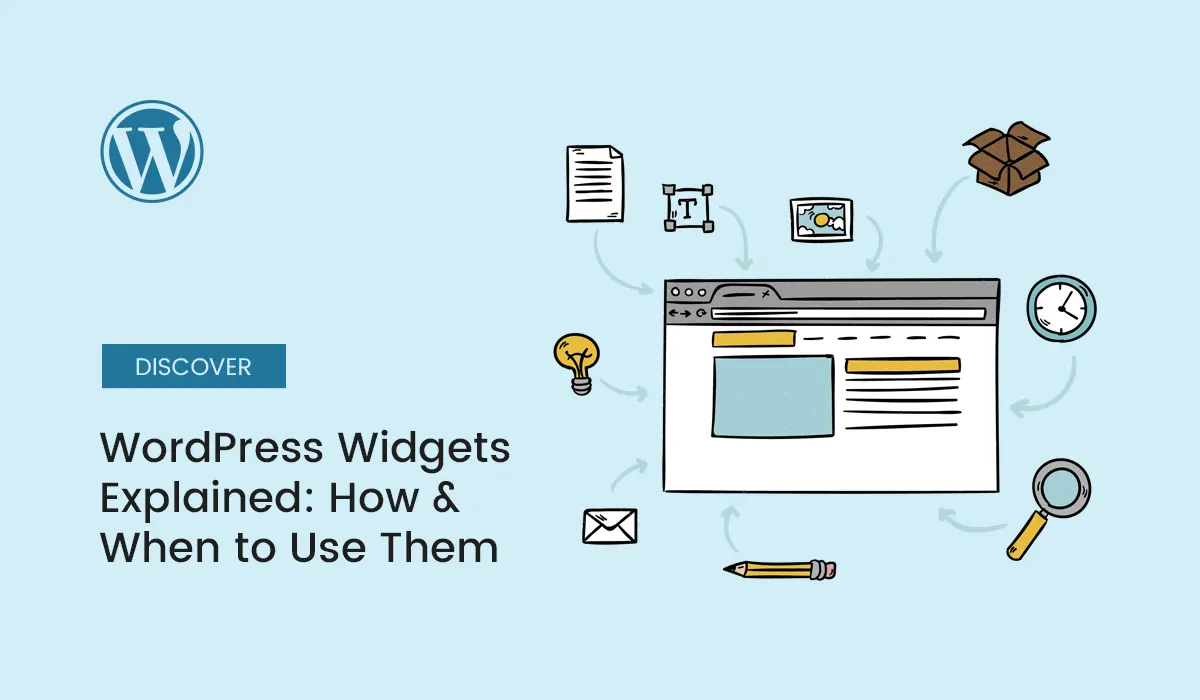
WordPress widgets are small content blocks that allow you to add specific features or functionality to predefined areas of your website—called widget areas—without writing code.
Common widget areas include:
- Sidebar
- Footer
- Header (theme-dependent)
- After post content
- Custom widget areas created by themes
Widgets are managed from the WordPress dashboard and can be easily added, removed, or rearranged.
Why WordPress Widgets Still Matter
Even with the rise of Gutenberg blocks and Full Site Editing (FSE), widgets remain useful for several reasons:
Quick Customization
Widgets allow fast changes without editing pages or templates.
Global Visibility
A widget appears across multiple pages automatically.
Theme Compatibility
Many classic and hybrid themes still rely heavily on widgets.
Plugin Integration
Many plugins add their functionality via widgets.
No Coding Required
Perfect for beginners and non-technical users.
How WordPress Widgets Work
Widgets work by placing content into widget-ready areas registered by your theme.
The basic workflow looks like this:
- Theme registers widget areas
- WordPress provides widgets (core + plugin widgets)
- You assign widgets to widget areas
- Widgets appear site-wide based on theme layout
The same widget can be reused in multiple widget areas with different settings.
Accessing Widgets in WordPress
How you access widgets depends on your WordPress setup.
Classic Widgets Interface
- Go to Appearance → Widgets
- Drag and drop widgets into widget areas
Block-Based Widgets Interface
- Widgets use blocks
- Still located under Appearance → Widgets
- Allows more layout control
Customizer Widgets
- Go to Appearance → Customize → Widgets
- Live preview while editing
Default WordPress Widgets Explained
WordPress includes several built-in widgets that cover common needs.
Search Widget
Adds a search bar to help users find content.
When to use:
Blogs, content-heavy sites, documentation websites.
Recent Posts Widget
Displays the latest blog posts.
When to use:
Blogs that publish regularly and want to increase engagement.
Categories Widget
Shows post categories in a list or dropdown.
When to use:
Sites with well-organized content categories.
Tag Cloud Widget
Displays frequently used tags visually.
When to use:
Content-rich blogs where tags add navigation value.
Archives Widget
Allows users to browse posts by month or year.
When to use:
Established blogs with long publishing history.
Custom HTML Widget
Lets you add custom HTML, scripts, or embeds.
When to use:
Analytics snippets, ads, embeds, or custom code.
Text Widget
Displays plain text or basic HTML.
When to use:
Short descriptions, disclaimers, or announcements.
Plugin Widgets: Extending Functionality
Many plugins add their own widgets, such as:
- Contact form widgets
- Social media feed widgets
- WooCommerce widgets
- Newsletter signup widgets
- Review and testimonial widgets
These widgets allow plugin features to appear globally without page builders.
Widgets vs Gutenberg Blocks: What’s the Difference?
This is a common source of confusion.
Widgets
- Appear in sidebars, footers, and global areas
- Managed from widget settings
- Best for site-wide content
Blocks
- Used inside posts, pages, and templates
- Offer more layout flexibility
- Ideal for page-specific content
Quick Rule
If content should appear everywhere, use widgets.
If content belongs to a specific page, use blocks.
When Should You Use WordPress Widgets?
Widgets are best used in the following scenarios:
Sidebars
Navigation menus, search bars, recent posts.
Footers
Copyright text, social links, contact info.
Blog Layout Enhancements
Author info, popular posts, ads.
WooCommerce Stores
Cart widgets, product filters, promotions.
Site-Wide Notices
Announcements, CTAs, subscription boxes.
When You Should Avoid Widgets
Widgets are not always the best solution.
Avoid widgets when:
- You need complex page layouts
- Content is page-specific
- Full Site Editing templates are in use
- You want pixel-perfect design control
In these cases, blocks or template customization is more suitable.
How to Add Widgets in WordPress (Step-by-Step)
Step 1: Open Widget Settings
Go to Appearance → Widgets
Step 2: Choose a Widget Area
Select sidebar, footer, or another widget-ready area.
Step 3: Add a Widget
Click the “+” button or drag the widget into the area.
Step 4: Configure Settings
Customize title, content, or options.
Step 5: Save Changes
Widgets update instantly across your site.
Managing Widgets Efficiently
Reordering Widgets
Drag and drop to change display order.
Removing Widgets
Delete widgets you no longer need.
Using Conditional Widgets
Some plugins allow widgets to appear only on specific pages.
Cloning Widgets
Duplicate widgets to reuse configurations.
Performance Considerations with Widgets
Widgets can impact performance if misused.
Best Practices
- Avoid too many widgets in one area
- Remove unused widgets
- Avoid heavy scripts in widget areas
- Cache widget output when possible
A clean widget setup improves both speed and usability.
Accessibility and UX Best Practices
- Use clear widget titles
- Maintain logical order
- Ensure keyboard navigation
- Avoid cluttered sidebars
- Keep mobile users in mind
Widgets should help users—not overwhelm them.
Common Mistakes to Avoid
- Overloading sidebars with widgets
- Using widgets for page-specific content
- Ignoring mobile layouts
- Leaving default titles unchanged
- Forgetting to test after theme changes
Simple discipline goes a long way.
Widgets in Modern WordPress (Future Outlook)
Widgets are evolving—not disappearing.
- Block-based widgets offer more flexibility
- Hybrid themes still rely on widgets
- Widgets coexist with Full Site Editing
- Many plugins continue to depend on widgets
Understanding widgets ensures compatibility with both old and new WordPress setups.
Final Thoughts
Understanding WordPress widgets—how and when to use them—is essential for building well-structured, user-friendly websites. While blocks dominate page content, widgets still shine in global areas like sidebars and footers.
When used correctly, widgets improve navigation, engagement, and usability without adding complexity. The key is knowing their role, limitations, and best practices.
Master widgets, and you’ll have better control over your WordPress site’s layout and functionality—no code required.
Improve your site layout and usability—apply what you’ve learned from WordPress widgets explained and start using widgets the right way today.